Wester Ross acheives “Biosphere Reserve” status!


WESTER Ross has secured a special biosphere reserve status from the prestigious United Nations Educational, Scientific and Cultural Organization (UNESCO).

The newly designated area extends from the tip of Knoydart northwards to Achiltibuie and the Summer Isles and inland eastwards to Garve, including population centres in Kyle of Lochalsh, Lochcarron, Gairloch and Ullapool.

While Biosphere Reserves are not so well known in the UK, Wester Ross now joins a network of 650 other such reserves across more than 120 countries. Galloway and Southern Ayrshire is the only other Biosphere Reserve in Scotland.

Such reserves aim to foster the harmonious integration of people and nature for sustainable development.

Highland Council’s chair of planning, development and infrastructure, Cllr Audrey Sinclair, said: “This accolade is great news for Wester Ross as it recognises the close relationship between our communities, our fantastic natural environment and our economy.”

Drew McFarlane-Slack, Highland regional manager of Scottish Land and Estates said: “We welcome this announcement and will work with Wester Ross Biosphere to showcase the potential for traditional estates to contribute to building a modern rural economy.”

Brian Easter, Chair of the Kyle and Lochalsh Community Trust added: “I am pleased that our area has been awarded this status and look forward to working with other community groups in projects of common interest.”

The new designation replaces an earlier Biosphere Reserve designation for Beinn Eighe National Nature Reserve. The original 1976 declaration related to a much smaller area, managed solely for nature conservation, research and education.

The UNESCO criteria were changed in the 1990s to provide greater focus on people’s relationship with the environment.

Existing Biospheres had to re-apply under the new criteria or withdraw from the programme.

Petition to keep Rua Reidh Lighthouse road open

The latest news on the still developing situation concerning the road towards Rua Reidh Lighthouse is that local people have started a petition to keep this road open. The petition is aimed at helping to pressure Highland Council to "adopt" the road, and therefore open it to public access. Usually, this would mean there would be associated costs involved, however it is hoped that in this one instance, it might be possible to continue existing arrangements for maintenance.

The petition can be found Here. , and there is also a facebook page which explains the background to the problem. Our own site carried a news story only last week.


Rua Reidh Lighthouse road Closed

We have received a letter from the current owners of the accommodation facilities at Rua Reidh Lighthouse to announce that the road is now closed with immediate effect to all vehicles, unless visitors are actually resident there. This move comes after a highly aggressive campaign lasting over two years by of the owners of the Keepers House, aimed deterring visitors and local people alike from travelling along this road. Only three seasons ago, under the previous owners, this was a day out for many, ending up with a warm welcome at an attractive visitor centre – no more, it would seem, and the community as a whole has been denied what was once a valuable visitor attraction and beauty spot for the area. The owners of the actual Lighthouse itself (the Northern Lighthouse Board), do not agree with this move to close the road off to the public, but have no powers over the road access, and have asked us to clarify this.

We very much regret the loss of what was once a valuable attraction for the area.


Wester Ross – THE place to be in 2016!

With the 2015 season now drawing to a close, many businesses here are looking forwards to 2016. The 2016 season will be kicking off with an early start next year, as local wildlife expert Nick Davies will be offering a chance to watch Sperm Whales as they cruise down the waters of the Minch in late February. Nick's business – Hebridean Whale Cruises – has also just released a new video on "You Tube" which shows just what you can expect to see here in the area around the Minch. Have a look here and see what there is!

2015 also saw the launch of the North Coast 500 – 516 miles of touring some of the very best scenery and experiences that you can find anywhere. And not just by car……here's another video here, this time by world renowned endurance cyclist Mark Beaumont, as he cycled the route earlier in 2015.

Hebridean Whale Cruises and North Coast 500 are only some of the reasons why you might want to come here next year – the food scene in Wester Ross is looking fantastic these days! For example, the "Gille Brigdhe" in Diabaig, has just won a top accolade as THE best place to eat in the whole of the Highlands area! And if you find out it's full the night you want to go….well….there's plenty more these days. The Applecross Inn , Kishorn Seafood Bar , Rockvilla Restaurant (In Lochcarron), "Spiral" and The Steading (both in Gairloch) and the Kinlochewe and Aultbea Hotels have all won praise for their use of local produce and excellent meals. Try them and see!

Finally, our own "Visit Wester Ross" future is now taking shape, with the launch of a five year development strategy for tourism in this area looming ever closer. The strategy is expected to "go public" in a couple of months time, and will provide the trade here with a blueprint for development for the foreseeable future.

So, we hope to see you become part of that, as a visitor to this beautiful area both in 2016 and beyond!


Huge boost for Museum plans!

Heritage Lottery Fund Say 'Yes'!


Gairloch Heritage Museum wins Heritage Lottery Fund support for new premises

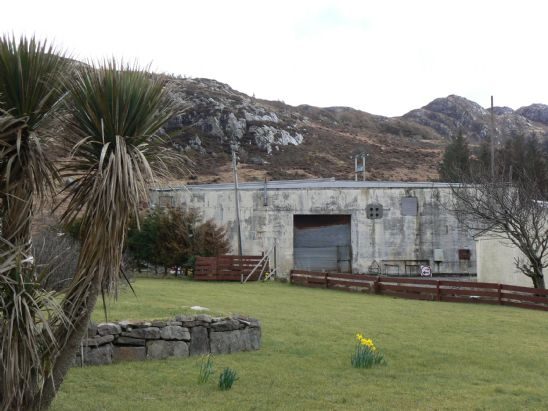
GAIRLOCH, 24th March 2015 – The Gairloch and District Heritage Company has received initial support from the Heritage Lottery Fund (HLF) to establish new museum premises in a redundant historic building, it was announced today. The project will convert a former Cold War period anti-aircraft operations room into an enticing cultural visitor attraction and community heritage hub. It will also ensure the long-term future of the museum’s collections and the cultural events it hosts. Development funding of £36,200 has been awarded to help the Gairloch and District Heritage Company progress their plans to apply for a full grant to renovate the building at a later date. The intention is to open the centre in Spring 2019.

The new premises will provide an environmentally controlled home for Gairloch Heritage Museum’s collection of artefacts, manuscripts and publications, which document the stories of the communities of Gairloch parish. It will also regenerate a redundant historic building, creating a key tourist attraction for the area. The project will offer training opportunities for the museum’s volunteers and increase their participation in interpreting and sharing the area’s heritage as well as creating a number of professional jobs in the area. The museum has been managed and run by volunteers since 1977 and is a cultural hub for the area. It houses the first Pictish stone found on the West coast mainland of Scotland, and its Gaelic language and literature resources are highly valued by Gaelic scholars. With the support of HLF, the new museum will reach out to broader audiences, build partnerships with other educational and cultural organisations and contribute even more significantly to the local economy.

Roy Macintyre, Chairman of the Company said “Gairloch Heritage Museum has been at the heart of the heritage and culture of the townships of Gairloch parish since the 1970s. Thanks to the support now being offered by the Heritage Lottery Fund, we have the opportunity to transform a redundant building into heritage centre for the community. It will enable us to expand our collections, offer new exhibitions on archaeology and the unique geology of the area, and re-present our much-loved social history displays. With proper library, archive and education rooms we will improve public access and have space to offer an even broader range of events and activities. We are delighted that HLF has endorsed our project to ensure that the future of the Museum is secure.”

Colin McLean, Head of the Heritage Lottery Fund in Scotland said: Gairloch Heritage Museum is bursting with stories and pictures which give us clues to what life was like in Wester Ross over the past 2,000 years and how it has shaped the region. We are delighted that the community has come together to preserve and share this precious collection and are pleased to give our initial support to their plans.”


museum 4574485

Editor NOTE: Most people who drive past the old Highland Council roads depot in Gairloch are unaware of its history – it simply looks like an old, run down square lump of concrete. However, it has an interesting "Cold War" history – it was actually built to withstand the impact of nuclear war, is made out of REALLY thick reinforced concrete – and used to have blast proof doors! It was intended to be a command centre bolt hole for many of the area's administrative resources in the event of the unthinkable happening!

So….don't underestimate it's hidden secrets!


Great eating experiences in Wester Ross

Gone are the days when the visitor had to search far and wide for good food in these parts!

Two local restaurants have picked accolades as two of the best places in Scotland to have a meal! The recent awards came from the adventure travel group "Wilderness Scotland" and underline how the eatery scene in Wester Ross has now developed into a real culinary experience!


Comments and links from the article are as below: 

Gille Brighde, Diabaig
This wee restaurant located on the shores of Loch Torridon offers a bounty of fresh local ingredients prepared with a real love of the area. Fantastic seafood and local venison comes highly recommended.
Website | Tel: 01445 790245

Applecross Inn
An absolute gem of a place. Award-winning seafood to die for in a cosy wee pub-like atmosphere bathed in some of the most stunning views of the west coast possible. A real favourite with us.
Website | Tel: 01520 744262

See more at: http://www.wildernessscotland.com/blog/our-pick-of-scotlands-best-restaurants/#sthash.qzXJeLrh.dpuf


Aside from these two, there are many other restaurants throughout the area selling high quality local produce – whether you are travelling through Torridon, Kinlochewe, Gairloch, Aultbea, or Ullapool….you are not far away from some of the world's best eating experiences!

New Visitor trail for the North Highlands – the NC500!

The official launch of an exciting new visitor trail for the North Highlands will take place at the Inverness Classic Vehicle Show on May 9th – this is the "North Coast 500"!

NC 500 is a 500 mile round trip of some of the most stunning coastal and mountain scenery in Europe, if not the world. Developed as a community inspired project, this is a long term project that will give the visitor the opportunity to take in a wide range of experiences along a trail that can take in anything from a long weekend to a full two week visit. Drive a section – or drive the whole trail – your choice!

In an anti -clockwise direction, this would start in Inverness, going up the East Coast towards the coastal fishing towns of the North East, along the beautiful Northern Coast past hidden beaches and bays, then down through the stunning scenery of Assynt and Wester Ross. Clockwise or anti-clockwise, the drama and the sights will be the same……just in a different order!

nc500 route logosm 5038407

After the Inverness show, a group of classic vehicles will set off around the trail, stopping off en route and (weather permitting!) taking photos, talking to people…and of course, appreciating the experience themselves!

Developed by North Highlands Tourism Initiative and strongly supported by ourselves – Visit Wester Ross – the route will now be developed over a number of years, to include "what's nearby" guidance, a strong online presence, and an information resource on the area as a whole, all aimed at encouraging visitors to spend more time in the area as they travel around.

To find out more, the NC500 has a website, a facebook page, and there are twitter and pinterest accounts that you can check out as well. Why not a have a look and see for yourself?

Wester Ross is turning GREEN!

Congradulations to "Sealife" – the Gairloch based Glass Bottom Boat. The long running business, owned by Rick and Jill Holmes, has just been awarded a Green Tourism Scheme "Gold Star" rating, and becomes the tenth Wester Ross based business to be awarded this rating.

The annual awards aim to honour those businesses and organisations that have done the most to promote sustainability within the industry, by implementing cost-saving practices that help the environment, improve customer service and benefit the bottom line.

These awards are keenly contested, and Sealife has done an amazing job considering the size and location of the business.

For further information on Green Tourism, and where to find other members in the Highlands area, look at the website.


Sharks, Whales, and Dolphins – and MPA’s!

In addition to the 30 marine protected areas (MPAs) in Scottish waters announced today, a further four sites could benefit species of whales, dolphins and sharks. This is according to a new report by Scottish Natural Heritage (SNH).

The report coincides with the announcement of 30 MPAs by Scottish Environment Secretary, Richard Lochhead.

The announcement follows last year’s public consultation which saw 99% of respondents in favour of an MPA network around Scotland.

After further research, SNH has published advice on a further four MPA proposals for Minke whales, Risso’s dolphins and basking sharks, species which are not included in the suite of 30 sites.

The new sites are in the Sea of the Hebrides, at North-east Lewis, the Southern Trench and Shiant East Bank, in the North Minch. All of these are off the coast of Wester Ross.

Ministers are considering this advice which may become the subject of a future public consultation.

Other features that could benefit from the additional four sites include sandeels, sea fan and sponge communities and geological features such as iceberg scours, troughs and moraines.

Ron Macdonald, director of policy and advice at SNH said:

“Scotland has one of the longest coastlines in Europe. The sea has always sustained the country economically and it is crucial to our future prosperity. In terms of wildlife, habitats and geology, Scotland’s marine environment is as diverse and dramatic as the land.

“We have a duty to help ensure Scotland continues to benefit economically from the sea and that this vital resource is managed sustainably for generations to come. That is what marine protected areas are really about. If confirmed these four additional MPAs could help these amazing animals which clearly thrive in Scottish waters and attract many visitors each year.”

Meanwhile the Scottish Government has also adopted SNH’s and JNCC’s list of Priority Marine Features (PMFs). This list will help focus future marine planning, research and conservation work.

Ron Macdonald added:

“We are extremely grateful to the many individuals and groups who have contributed to this work. Their input was hugely helpful in shaping our advice to Marine Scotland and Ministers on the suite of sites, possible MPAs and PMF list announced today.”


Scotland’s Seas – Why are they so important?

The 18,000km coastline of Scotland is nearly as long as half the circumference of the earth. It would be quicker to walk to Australia than to walk every part of it. Someone who tried this took six months to walk along the Scottish mainland coast alone.

Approximately 8500 species of marine plants and animals are known to live in Scottish coastal waters. However, new species are still being discovered every year, particularly in deeper waters to the north and west of Scotland.

The Basking Shark is the world's second largest fish (beaten only by the whale shark). They can filter a thousand tonnes of sea water an hour for plankton, the equivalent of the entire volume of the Royal Commonwealth Pool in Edinburgh. On average, the adult basking shark reaches a length of 6–8 metres and weighs about 5 tons.

As Risso’s dolphins age their skin tone lightens. They are born a dark black/brown colour but over the years this lightens to pale grey (their Latin name means ‘grey whale’), with some animals turning completely white.

Basking sharks have up to 1500 tiny teeth in their mouths – these are not for eating, but are thought to be used to grasp their partner during mating.

Minke whales in Scotland use bird-associated feeding methods. The whales hunt large concentrations of schooling fish which have been brought to the surface by feeding seabirds above and predatory fish below, swooping in to consume the ball of prey with minimal energy expended. Minke whales are commonly seen in association with kittiwakes, herring gulls, gannets, shearwaters and guillemots. So next time you are whale watching, look out for the birds!

Marine survey work in 2012 recorded the largest flame shell bed in Scotland on the seabed at the mouth of Loch Alsh, under the Skye Bridge. With an area of 70 ha this might be the largest bed in the world! These beautiful flame-tentacled bivalves grow to around 3 cm in length and there can be as many as 700 individuals in 1 square metre of the seabed, so the bed in Loch Alsh might be home to up to 490 million flame shells…. scorching!!

The main current responsible for bringing warmer waters to Scotland is the North Atlantic Drift. This transports huge volumes of water, up to 16 million cubic metres every second, at speeds of approximately 3cm a second, about the same speed as an average marathon runner.

Ocean quahogs, Arctica islandica, are deepwater clams which live around the coast of Scotland,and they can live longer than any other animal in the world.

Maerl is often referred to as Scottish coral, but it is not a coral at all – it is actually a seaweed! Maerl Phymatolithon calcareum is a species of red calcifying algae that form unattached, branching nodules on the seafloor. Maerl provides a distinct habitat; some of the animals that live in maerl beds have become specially adapted and have not been found anywhere else in Scottish waters.

One clam has been found that was 500 years old, so it was already alive when the Tudors came into power!

The phosphorescent seapen, Pennatula phosphorea, which is related to anemones and corals and lives on muddy and sandy seabeds around Scotland, looks like a miniature Christmas tree and can light up in waves of blue – green light dancing along its branches.

Sponges are some of the most ancient animals around today, and have a very successful chemical self defence system – components of which have been discovered to be very effective cancer treatment drugs.

A striking feature of the west Scottish coastline is the abundance of raised beaches and cliffs. These are former coastlines now sitting hundreds of metres inland and up to 30 metres above sea level. During the Ice Age, up to a kilometre of ice lay on Scotland’s mountains, and the weight of this ice was so great it squashed the land down into the earth’s crust and mantle below. Now the ice has gone the reverse process is occurring, and Scotland is ‘bouncing’ back up (at 1-2mm a year); this is called the “isostatic rebound”.

There are only a handful of places in the world where the beautiful reef structures built by aggregations of the organ tube worm Serpula vermicularis have been found. One of the best of these is in Loch Creran near Oban.

There is a small, beautifully coloured fish called Fries’ goby, Lesuerigobius friesii which lives in burrows it shares with the much bigger langoustine or Norway lobster Nephrops norvegicus in Scotland’s muddy seabeds. The shy goby might act as a sort of ‘burglar alarm’ to the prawn, warning it of approaching dangers.

Wrasses, fish inhabiting rocky coasts and reefs which are commonly seen by divers all around Scotland, are able to change sex during their life. Among any group of wrasses there will only be a single male, and when he dies the most dominant female will undergo a sex change and become the new male.

Trips on the Loch, anybody?

The Loch Maree Hotel has recently launched a new service aimed at guiding visitors around Loch Maree in a manner that pays due regard to the Internationally important wildlife and biodiversity of the area.

The Loch has a historical record dating back to the ancient druids and Vikings that once lived there, although nowadays the stunning loch  – surrounded by several 3,000ft high mountains – is better known for its unique ecology and rare wildlife, such as White Tailed Sea Eagles and Black Throated Divers.

The new service from the hotel is a daily service that operates from Easter through to October (weather dependent) and is one that brings a fascinating new attraction to the Wester Ross area.